What Is the Ethereum Virtual Machine?
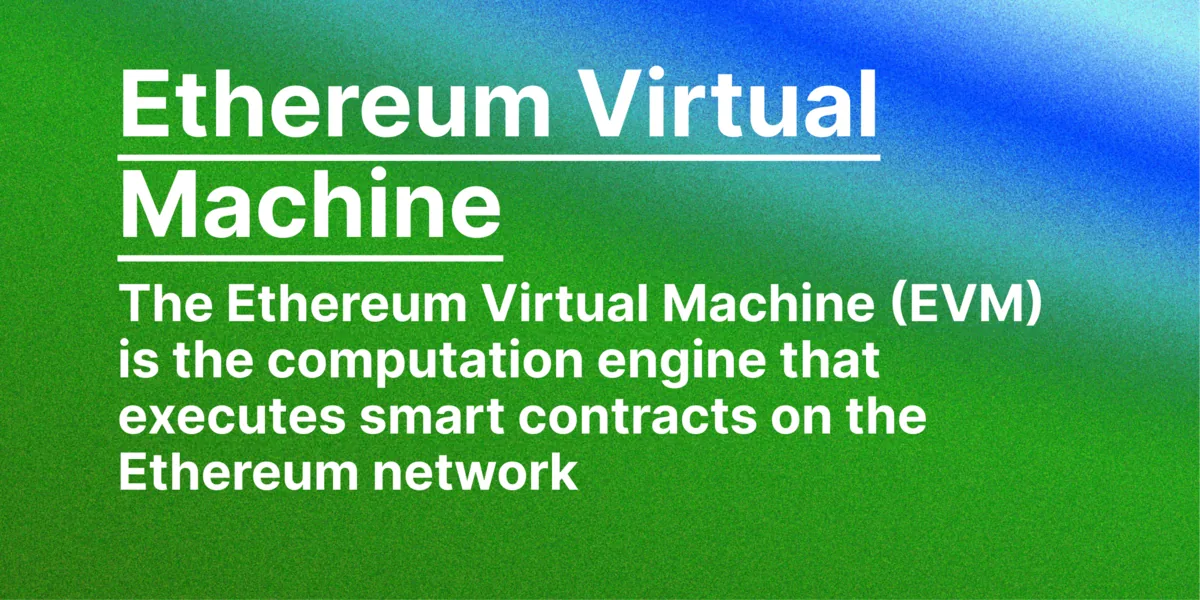
The Ethereum Virtual Machine (EVM) is a decentralized computation engine that executes smart contracts on the Ethereum network. It serves as the runtime environment for developers to deploy their smart contracts and decentralized applications (dApps). A helpful analogy to understand this is that the EVM is the operating system (OS) governing smart contracts on the Ethereum blockchain, much like how Windows is the OS governing most computer applications.
The EVM operates as a virtual central processing unit (CPU) on thousands of independent nodes, ensuring all codes run securely and consistently without central control. While the EVM is native to the Ethereum network, it is compatible with other blockchains including Binance Smart Chain, Polygon, and Avalanche.
How Does Ethereum Virtual Machine Work?
Here’s a detailed overview of how the Ethereum Virtual Machine operates.
1. State Machine
The EVM operates as a computation engine that changes across states. This implies that when a transaction is sent to a smart contract, the EVM processes the transaction and may change Ethereum’s global state to reflect the transaction outcome.
For clarity, the state is a comprehensive data structure that tracks information about all accounts, balances, smart contracts, and their storage across the entire network.
2. Smart Contracts
When a smart contract is deployed on Ethereum, it is compiled into bytecode and stored on the blockchain. The EVM executes this bytecode when triggered by transactions from users or other contracts.
3. Gas System
Each operation in the EVM consumes a certain amount of gas (a unit that measures computational effort). Users pay for gas in Ether, which helps prevent excessive resource usage and network spam.
4. Turing Complete
The EVM can perform any type of computation within the gas limit, making it a flexible and programmable environment where developers can build decentralized applications.
5. Decentralized Execution
The EVM runs the same code on every participating node in the Ethereum network, ensuring all nodes reach the same result to maintain consensus. This decentralization makes Ethereum a trustless and secure platform for executing smart contracts.
Key Features of Ethereum Virtual Machine
The EVM has several key features that make it integral to the Ethereum network, and they include;
1. Decentralization
The EVM operates on a global network of Ethereum nodes, ensuring that no single entity controls or can alter its operations. This decentralization is crucial for trust and censorship resistance.
2. Smart Contract Execution
The EVM is designed to execute smart contracts. Once deployed, these contracts are immutable, providing transparency and reliability.
3. Turing Completeness
The EVM is Turing-complete, meaning it can execute any algorithm or computational task. This feature allows developers to create complex applications with diverse functionality.
4. Isolation and Security
Each contract runs in an isolated “sandbox” environment. This isolation enhances security by preventing potential bugs or malicious code in a single contract from affecting the broader network.
5. Stack-Based Architecture
The EVM uses a stack-based execution model that makes operations efficient and manageable within a resource-constrained environment.
6. Interoperability
The EVM is compatible with other blockchains like Polygon, Avalanche, and Arbitrum. This interoperability enables developers to deploy applications on multiple networks with minimal design changes.